Tuesday, 15 March 2011

Stout and Sultana Loaf

In a nod to both St Patrick's Day this Thursday and my trip down to the East Kent Coast I decided to make this sticky, spicy and very easy tea loaf from Oyster stout and dried fruit.

I adapted the recipe from Simon Rimmer's simple Tea Loaf, but used the stout instead of tea and just sultanas instead of a mixture of dried fruit.  The stout gives it a lovely rich, malty flavour but feel free to use strong tea or ale instead.  I also used some home candied orange peel, which went well with the flavours of cinnamon and nutmeg, but you can use mixed peel or just add a few more sultanas.

This is very sticky and crumbly when first out of the oven, so allow to cool completely before cutting.  It's also a cake that seems to improve with keeping, (if you can resist) so perfect for a camping or caravanning trip.  The mixture can also easily be doubled if you want to make a loaf for now and save one for later.

Stout and Sultana Loaf
200g Sultanas (or Mixed Dried Fruit)
25g Mixed Peel
300ml Stout, Ale or Strong Tea
250g Self Raising flour
200g Soft Light Brown Sugar
1 free-range Egg
1 tsp ground Cinnamon
1 tsp freshly grated Nutmeg
Butter to serve
Place the stout in a bowl and add the dried fruit and mixed peel.  Cover, place in the fridge and allow to soak overnight.  (if you forget to soak the fruit the night before just gently heat the stout in a saucepan, add the fruit and soak for a couple of hours)
Preheat the oven to 175c/375f
Add the flour, sugar and egg and spices to the soaked fruit and mix until well combined.
Tip into a buttered 22cm x 10cm greased and lined loaf tin (I just lined the bottom and sides)
Cook for 1 1/4 hours, or until a skewer comes out clean.  (I cooked this for closer to 2 hours, with the top covered in foil at the end to stop it burning)
Once cool serve in thick slices with plenty of butter.

Perfect slathered in butter with a cuppa, or, as I'm planning to, wrapped up and packed with a battered Thermos of tea to enjoy on a windswept Whitstable beach.


Friday, 11 March 2011

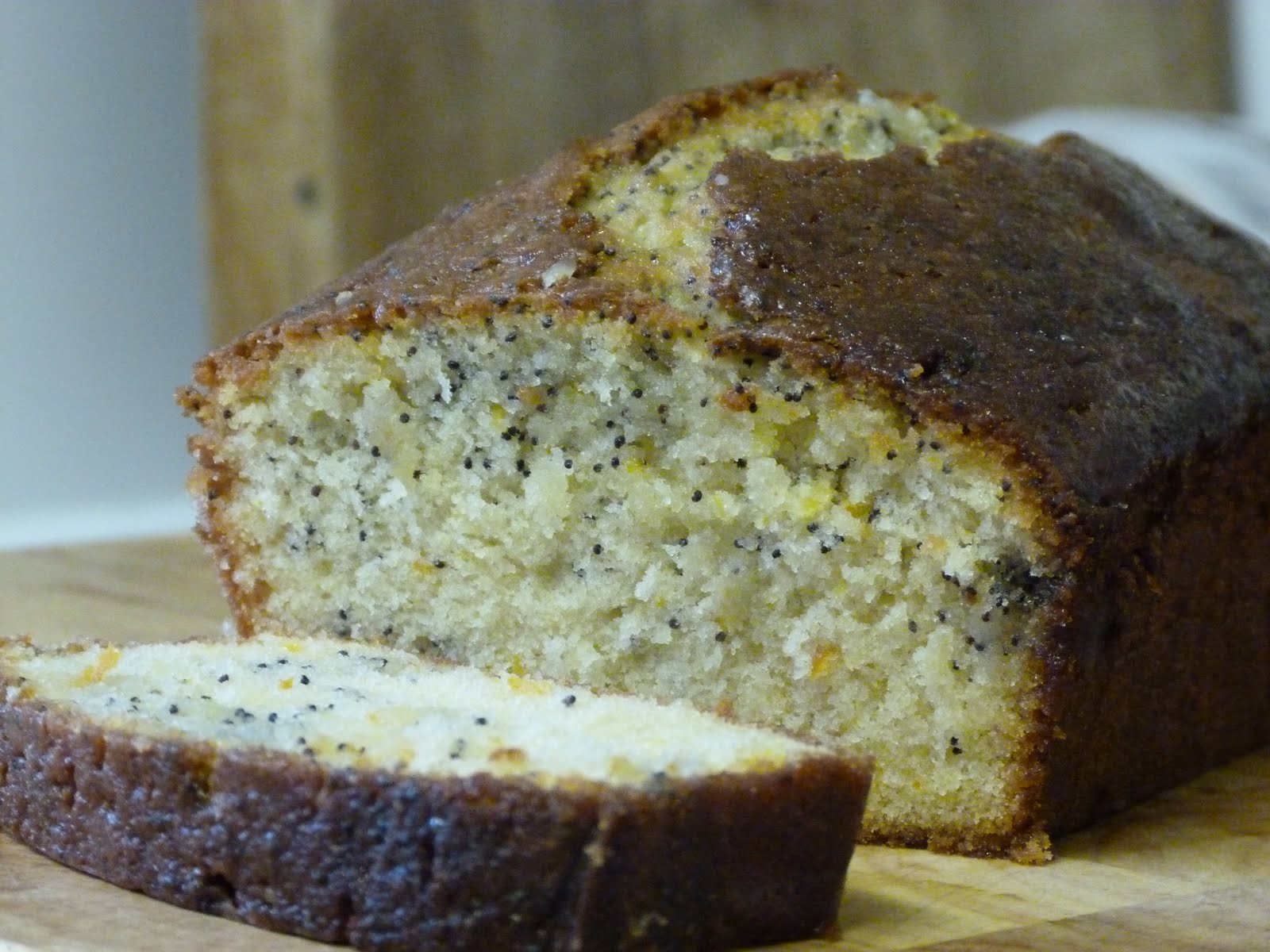
Seville Orange and Poppy Seed Cake

After spending the last few weeks turning piles of citrus fruits into various culinary delights I finally thought I had used up the glut. So, you can imagine I was rather crestfallen to find a bag of forgotten Seville oranges hiding away at the bottom of the vegetable rack. Any frustration was short lived though; Seville oranges have the most wonderful aromatic, bitter flavour and, with such a fleeting season, I wanted to make the most of them.

A grey and rainy winter afternoon just calls out for a slice of homemade cake.  So, after dusting off my trusty copy of Nigella's How To Bake, and digging out my mixing bowl and wooden spoon, I got down to cooking this easy peasy orange squeezy loaf cake. 

I am not a natural born baker: for one thing I find it almost impossible to measure ingredients properly or follow recipes to any degree of accuracy.   It's not because I think I know better (well, maybe sometimes...) but more because I enjoy improvising in the kitchen and making things up as I go along.   Sometimes though it's worth being disciplined just to see the condensation run down the kitchen window and smell the rich, citrus perfumed fug as a cake bakes in the oven.

The good thing about this cake is that in essence it's just a simple sponge recipe with a few added extras to jazz it up.  It's very easy to make, with minimal ingredients and the syrup should keep it moist for a week (if it lasts that long!). The original recipe uses lemons and here I have just swapped them for the same amount of Seville orange juice and zest. The Seville oranges give it a delicious bitterness and the juice cuts through the sugar to make the syrup lovely and tangy.   The poppy seeds are my own addition, leave them out if you want  but I think they look pretty and add a nice crunch.  And of course I had to get my own twist in the recipe somehow.


Seville Orange and Poppy Seed loaf cake

125g softened butter
175g caster sugar
2 large eggs
zest of 1 Seville orange
175g self-raising flour
4 tbsp milk
2tbsp Poppy Seeds (optional)

for the syrup:
juice 2-3 Seville Oranges (about 4tbsps)
75-100g icing sugar

Preheat the oven to 180C/Gas 4
Grease and line a 2lb loaf tin (23x13x7cm) with baking parchment. (I lined the base and ends of the tin and buttered the sides thoroughly)
Cream together the butter and sugar and then add the eggs, beating them in well. Add the flour and orange zest and fold in gently but thoroughly until well mixed. Add the 4 tbsp milk and mix well.
Add poppy seeds, spoon into the loaf tin and smooth the surface. Place into the oven.
Cook the cake for 45 minutes or until a skewer comes out clean

While the cake is cooking, make the syrup. Place the orange juice and icing sugar into a small pan and heat gently until the sugar dissolves.
As soon as the cake comes out of the oven poke holes all over the top with a skewer and pour the warm syrup mixture evenly across it.
Leave in the tin until completely cold, then carefully remove and slice

Monday, 7 March 2011

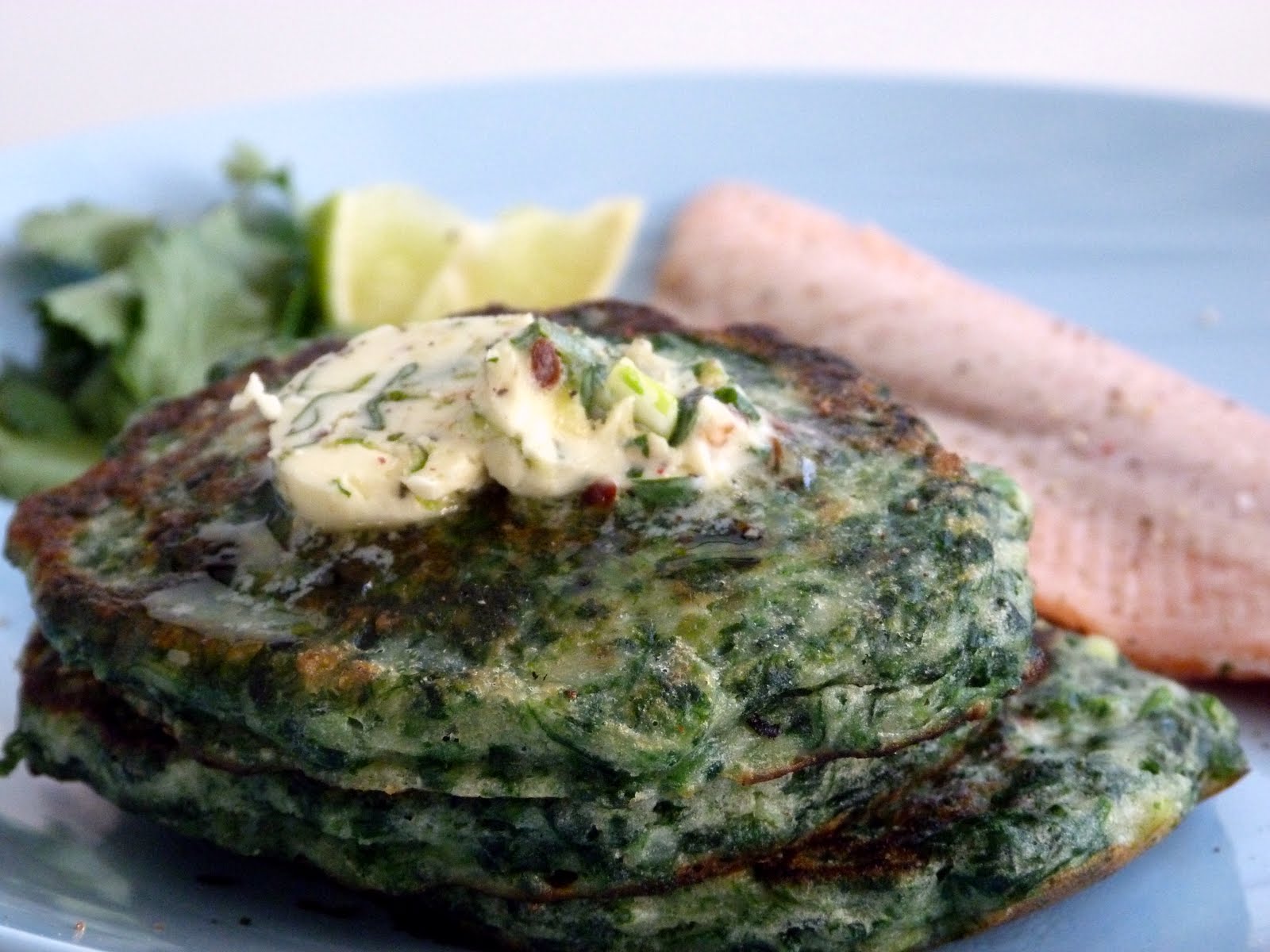
Green Pancakes with Lime Butter

As I knew the Ewing was planning to work late next week (and would probably be more interested in watching Holby City and eating chocolate biscuits than making pancakes) I decided to celebrate Shrove Tuesday two days early by making these Green Pancakes with Lime Butter for Sunday brunch.

I got the basis of the recipe while leafing through a copy of Yottam Ottolengi's Plenty at work last week.  It looked delicious, seemed apt for Pancake Day and there weren't any outlandish ingredients to hunt around for.  Perfect!

If I had looked at the method a bit more closely the idea of making a flavoured butter, steaming the spinach, whisking egg whites, finely chopping veg and making a batter may have put me off.  As it was it was all pretty simple, routine stuff.  And with a beer in hand, the cricket on the radio and the sun shining it turned into a very enjoyable and relaxing morning in the kitchen.  (not sure the Ewing was so impressed with all the washing up though...)

Originally I was going to skip the lime butter but, as I had all the ingredients to hand, I decided to make it properly. (although I just guessed the quantities for my butter I have put Ottolenghi's original amounts in the recipe below, minus the half clove of garlic which I missed out.)  The lime really lifted the dish and the butter added a lovely extra richness to counteract all the green veg goodness in the pancakes.The recipe suggests any leftover butter could be served with baked sweet potatoes and I think it would work well with fish or chicken too.

Green Pancakes with Lime Butter
For the lime butter
100g unsalted butter, at room temperature
Zest 1 lime plus juice of half a lime
Large pinch of salt
Large pinch of pepper
1 tbsp coriander leaves, chopped
Large pinch of chilli flakes
For the pancakes
110g self-raising flour
1 tbsp baking powder
1 egg
50g unsalted butter, melted
Pinch of salt
Pinch ground cumin
150ml milk
Bunch of spring onions, finely sliced
1 green chilli, finely sliced
250g baby spinach
1 egg white
Olive oil, for frying
First, make the lime butter. Put the butter in a bowl and beat with a wooden spoon until it turns soft and creamy. Stir in the remaining ingredients. place on to a sheet of clingfilm and roll into a sausage shape. Twist the ends to seal, then chill until firm. (I stuck mine in the freezer)
For the pancake batter, put the flour, baking powder, egg, butter, salt, cumin and milk in a mixing bowl, and whisk until smooth. Add the onion and chilli to the batter.
Put the spinach in a pan with a splash of water, cook until wilted, drain, squeeze dry, then roughly chop and add to the batter.
Whisk the egg white to soft peaks and carefully fold it in to the batter.
Pour a little oil into a heavy frying pan and place on medium-high heat. For each pancake, ladle two  tablespoons of batter into the pan and press down gently.  (I cooked three at a time)
Cook for about 2 minutes on each side, until a nice golden-green colour. Transfer pancakes to a plate and keep warm in the oven.
Repeat, adding oil as needed, until all the mixture is used up. (I made nine pancakes altogether)
To serve, pile up three pancakes per person and place a disc of flavoured butter on top to melt.

I served this with some smoked trout, lime wedges and a few coriander leaves and it was delicious.  The panckes would work well with anything salty; bacon, chorizo, goats cheese or grilled halloumi would be good, or even just some dressed salad leaves if you're feeling virtuous.  A few freezing cold beers certainly wouldn't go amiss with this either.

Friday, 4 March 2011

Oxtail Ragu with Smoked Cheddar Polenta

A winter's tail
Last week I woke up missing part of a back molar.  One emergency trip to the dentist later and I popped into the shops to stock up on tinned soup, rice pudding and bananas.  It is still a mystery how, 15 minutes later, I emerged with a whole oxtail. (What do dentists put in their anesthetic?)

After the initial shock of wondering how on earth I was going to find a pot big enough to fit it in  (I was still feeling pretty foggy) I realised that this would be a great chance to hone my (nonexistent) butchery skills and make a lovely, rich wintery stew to celebrate these last dark days before Spring is finally sprung. For inspiration I started reading through a stack of cookery books and checking out some links I had been sent.  I then set off into the kitchen, armed with various tips and advice, to attempt my own oxtail alchemy. 

The first small matter was cutting the oxtail into the more manageable red and white discs you see lying in the butcher's window.  I sharpened my biggest knife, unfurled the tail on my largest chopping board and got stuck in.  Oxtail is comprised of a long, jointed piece of meat that, conveniently, divides itself into portions. Find the joint and the knife will slide through like butter, miss the joint and you will be hopelessly sawing through bone.  After a few initial misses I managed to divide the tail into 12 pieces with remarkably little fuss.

Next I wanted to think about the flavours in my ragu.  I started with a base of roughly chopped carrots, celery and onion for sweetness and flavour.  I wanted to add some red wine to flavour and enrich the sauce and, as I only had a large glass left in the bottle, I also added a good slug of brandy and some beef stock.  Finally, to really bring out the oxtail's meaty flavour, and to add a lovely spice, I added a few simple aromatics.  Star anise, which works wonderfully with beef and has a deep licorice flavour, lots of salt and pepper, and finally the juice and zest of an orange.  Again, the orange compliments the beef and the citrus helps brighten the dish and cut through the richness.

Originally I wasn't sure if I wanted a stew, with the meat served on the bone and vegetable pieces in a stock, or a ragu with just shreds of meat and a very thick, glossy sauce.  In the end I went for the latter but this could also be served unstrained with the veg and meat left on the bone. (I would still make it the day before to let the flavour develop and so you can skim off any fat) Or, if you prefer, strain off the original veg and shred the oxtail from the bones.  Then soften more carrot, celery and onion in a clean pan, add the shredded meat and stock and reduce until the sauce is thickened slightly.

To serve I choose wet polenta (quick cook is fine and easy after two days cooking the oxtail), flavoured with a lovely smoked cheddar I had in the fridge and a big glug of decent olive oil.  Any leftovers can be poured onto a tray, chilled and then cut up and grilled the next day. You could also serve the ragu with pasta, tagliatelle is good, dumplings or a big pile of fluffy mash. 


Oxtail Ragu with Smoked Cheddar Polenta
1 Oxtail (1.5 kg) Jointed
Seasoned Flour
1 Onion
2 Sticks Celery
2 Carrots
Large Glass of Red Wine
Small Glass of Brandy (optional)
Beef Stock
2 Star Anise
Strip of Zest and Juice of 1 Orange
Salt and Pepper
1 Box of Quick Cook Polenta
100g Smoked Cheddar or Parmesan
Knob of Butter/Olive Oil
Salt and Pepper
Chopped Parsley to Serve

Take your pieces of oxtail, dredge in seasoned flour then brown in batches in a casserole with some olive oil. Take pieces out and drain.
Roughly chop the carrots, onions and celery and soften in the same casserole. The add brandy and wine and bring to the boil.
Add the browned meat, star anise, orange zest and juice and beef stock to cover.
Simmer, on a low heat for two to three hours or until the meat is soft and starting to fall off the bone.
Put pieces of oxtail in a bowl and allow to cool. Shred meat from bones and remove all excess fat and gristle.
Meanwhile strain stock into a clean dish and discard all vegetable pieces and spices.
Place meat in stock and refrigerate overnight.
Skim fat from the top of the stock and then heat stock and oxtail together, uncovered until the sauce is thick and glossy and coats the meat.
Cook polenta as per instructions on the box and then stir in cheese, salt and pepper and a knob of butter or a good glug of olive oil.
Serve the ragu on top of the polenta, sprinkled with some chopped parsley and extra olive oil.

It's certainly not fast food, but it's well worth the effort for a glorious, sticky, silky stew that really warms those winter cockles.


Tuesday, 1 March 2011

Peppermint Oreo Ice Cream


Almost as soon as I had washed the ice cream bowl and put it back in the freezer I was already plotting the next flavour combo.  Sticking with the super easy sweet cream B&J base I decided on the rather moreish sounding Mint Oreo.


Mint  ice cream can be elusive and a bit hit and miss if you do find it.  Sometimes it's subtle and delicious and sometimes it's akin to eating frozen toothpaste with those square, gritty choc chips in it.  Mint flavouring, and the industrial quantities of green food colouring in some brands, can also have a unpleasant aftertaste.  So by making your own you can use a decent quality extract (or even infuse fresh mint leaves) and make it as minty (and choc-chippy!) as you like.

Ben and Jerry's used to make the fabulous mint choc chunk but the only place I have seen this recently was the B&J Festival last year.  My own favourite is made by Beechdean, who are based just up the road from me.  You can often find their mini tubs sold at the interval in theatres.  http://www.beechdean.co.uk/.


I used Sainsbury's American  peppermint extract and double chocolate Oreos to bump up the choc quota.  I also used single cream and skimmed milk in the sweet cream base.  This was not for any health reasons but because it's what I had in the fridge.  Interestingly this was nearly as rich as the Coffee Heath Bar Crunch and seemed to benefit from being less creamy as it gave the peppermint flavour a cleaner, brighter flavour.  With all the eggs, sugar, cream and biscuits this can hardly be described as health food but it did reduce the fat content without affecting the taste and texture of the finished ice cream.


Peppermint Oreo Ice Cream
Makes 1 Quart (can easily be halved)
2 Eggs
1 1/2 Cups Sugar
2 Cups Single Cream
1 Cup Milk (I used Skimmed)
2 tsps Peppermint Extract
12 Oreo Cookies
Chop cookies into small pieces and put in the freezer.
Whisk the eggs in a large bowl until light and frothy, approx 1-2 minutes.
Slowly add sugar to the egg mixture and whisk thoroughly for another 2-3 minutes.
Add milk, cream and peppermint extract and give a final whisk to combine.
Place mixture in fridge to chill.
Freeze according to your ice cream maker's instructions.
Just before the mixture reaches the desired consistency stir in the frozen cookie pieces.
Serve immediately or transfer to a container and place in the freezer to firm up further.


This was another big success.  A subtle, sweet mint smell and just the right amount of tongue tingling flavour.  The cookies gave it a crunchy chocolate hit, alternatively you could use plain choc chips.  It also makes a great milkshake, just blend two or three scoops of ice cream with a cup and a half of milk per person. A shot of white rum works well too!

Wednesday, 23 February 2011

Byron Burger: The Big D


February has become a special month in the calendar for burger lovers and I was keen to get down to Byron to bag one of their limited edition, meaty behemoths otherwise known as the Big D.

Many food bloggers seem to be on the path of enlightenment, trying to find their burger nirvana, and I'm no different.  The problem is what constitutes the perfect burger? Should it be shaped more like a cricket ball or smashed down on the flat top? Flame grilled or fried? Should the bun be sourdough, brioche, bap or something else entirely?  Should there be mayo, onions, salad?  And that's before we even get started on the controversial addition of pickles...

I think, if I were pushed, my perfect patty would be medium rare (I love bloody steak but burgers can often be a little bit slimy if they're too pink)  flame grilled and served on a slightly chewy, slightly sweet, slightly toasted bun.  It would be topped with a nice, melty slice of cheese and onions, ketchup, mustard and pickles.  Plenty of pickles. 

The Big D may not be the perfect burger, but it's certainly pretty good. I ordered mine medium rare with Montery Jack and the Ewing chose American cheese.  We also ordered some fries and courgette fries on the side and a couple of Sierra Nevada Pale Ales to wash it all down.
The burgers tasted great: a 8oz patty of delicious Scottish beef supplied by Knightsbridge butcher O'Sheas and perfectly cooked, pink and juicy throughout.  The buns were fine, although they seemed a little too big for the filling and crumbled apart too easily.  The cheese was comfortingly melted and mild and was complemented with a dollop of yellow mustard.  Salad was crispy and I always love the pickle spears that come with every burger.
One Big D with  Monterey Jack

And one Big D with American

Perfectly pink

Both sides were good, the courgette fries came out piping hot and were particularly moreish and crispy.  The Sierra Nevada Pale Ale is a spicy, citrussy beer that I think pairs with the burgers very nicely and bonus points too for the glasses that had come straight from the fridge.

Overall Byron's is a very decent place to get a burger.  The short menu, no pineapple or satay sauce here, shows that they care about the simple things done well.  At £10.50, sans cheese or sides, it's not the cheapest out there, but, cooked right, it seems worth it. The Byron Burger (dry cure bacon, mature cheddar, Byron sauce) is a year round thing of beauty, but the Big D is a annual treat worth seeking out.

After the burgers we headed over to the Shepherd's Bush Empire to watch the legendary Edwyn Collins. A fab night of meat and music. And a few more beers...


Byron on Urbanspoon

Monday, 21 February 2011

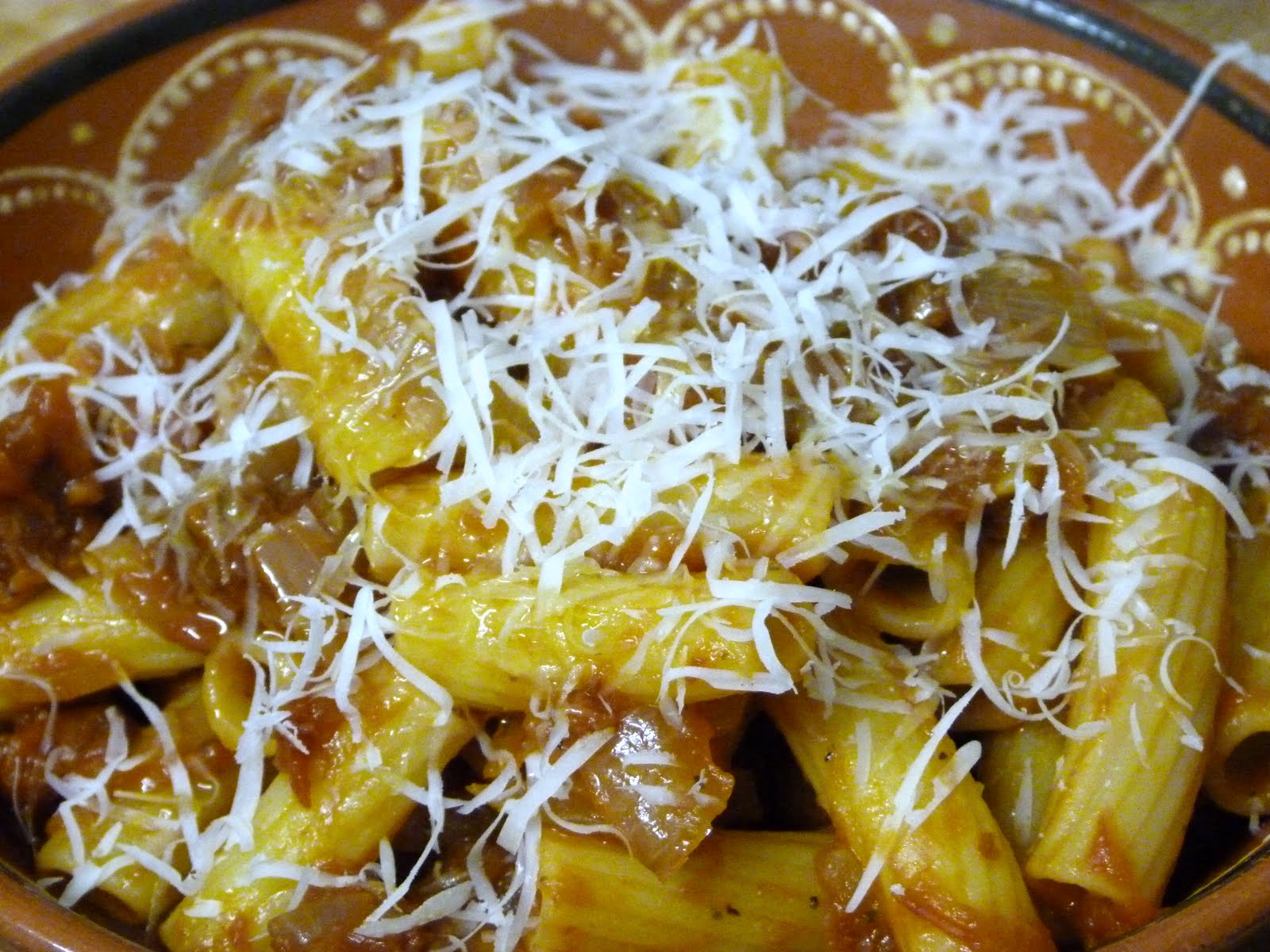
Rigatoni with Salami and Chilli


Some like it hot.


I was planning to make Thai mussels for Valentine's Day but, after getting home late from work last Saturday, I had one of those 'allthisfoodinthefridgeandtheresstillnothingtoeat' moments and we ended up eating them two days early. (with a rather nice bottle of Sancerre kept under the stairs for such emergencies) Luckily the Ewing had bought me a delicious salami for Christmas and most of it was still lurking at the back of the salad drawer.  I slowly cooked some onions and garlic until they were sticky and golden, then added the fried sausage, tomato and plenty of dried chili. (Peppers are a great addition too, sliced and added with the onions.)  You can use any sausage or chorizo, just make sure it's full flavoured enough to stand up to the punch of the chili heat.

While this recipe may seem similar to the Bucatini all'Amatriciana I blogged about recently the key to that dish was a few precise ingredients, this can be improvised to include what ever you've got in the cupboard.  It pretty much resembles a meaty arribiata sauce and, with the English translation being angry or 'pissed off', it made the choice seem even more apt as an antithesis to all the usual lovey-dovey Valentine's stuff.
.

Rigatoni with Salami and Chilli
1 Small Salami
2 Onions
Olive Oil
1 tsp Sugar
1 Clove of Garlic
3 Dried Red Chillies
1 Tin of Tomatoes
200g Rigatoni
Parmesan or Pecorino to serve

Thinly slice the onion and garlic and slowly caramelise in some olive oil with the sugar and a pinch of salt. (about 20 minutes)
Meanwhile chop the salami into chunks and fry in a pan until crispy.
Add the drained sausage pieces and tomatoes and chillies to the onion and simmer gently until reduced.
Cook the pasta in salted water, drain then return to the pot and stir through the sauce.
Serve with plenty of grated parmesan or pecorino


While a big bowl of chilli-laden garlicky carbs may not be everyone's idea of a romantic dinner à deux, it's certainly a great way to spice things up.